Artificial Grass vs Real Turf: Which Lawn Suits You?
In the artificial grass vs real turf choice, real turf costs less to lay, supports wildlife and can be renovated for decades, but needs mowing. Artificial grass needs no mowing and copes with shade and heavy wear, but gets hot in sun, offers little habitat and eventually goes to waste.
Last reviewed: by Natural Aspect Gardening
Published: by Natural Aspect Gardening, Epsom
Artificial Grass vs Real Turf at a glance
- Real turf
- Mowing needed; supports wildlife; best laid mid-autumn
- Artificial grass
- No mowing; stays green in shade; surface heats up in sun
- Clay soils
- Both need good preparation to avoid waterlogging
- Small, shady or heavily used areas
- Artificial grass often works better
- Wildlife value
- Real turf is far better
How do artificial grass and real turf compare?
| Factor | Real turf | Artificial grass |
|---|---|---|
| Upfront cost | Usually lower | Usually higher, including the base |
| Ongoing upkeep | Mowing, feeding, occasional watering | Brushing, leaf clearing, occasional rinsing |
| Wildlife | Supports insects, worms and birds | Very little |
| Shade and heavy wear | Can thin out | Stays green |
| Summer heat | Stays cool; may brown in drought | Surface can get very hot |
| Lifespan | Can be renovated indefinitely | Wears out and must be replaced |
When is real turf the better choice?
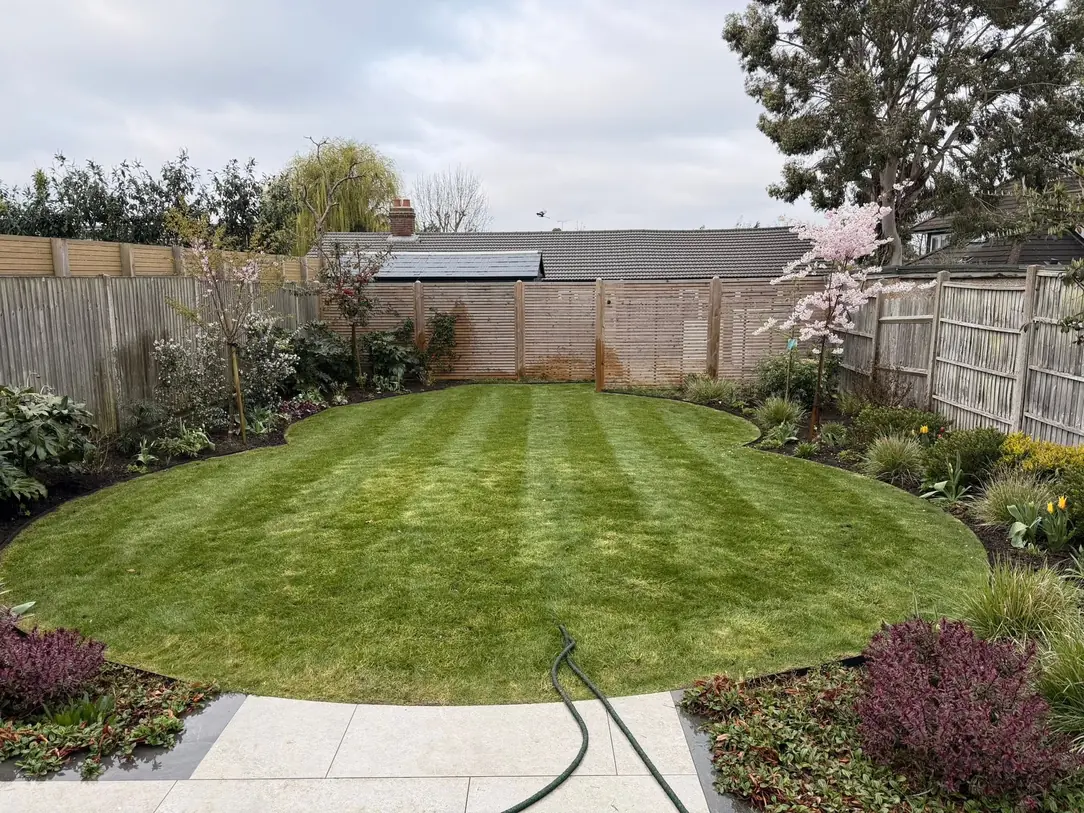
Real turf suits most family gardens, especially larger lawns, gardens where wildlife matters and anywhere that gets reasonable sun. It stays cool underfoot in summer and can be repaired and over-seeded rather than replaced. The Royal Horticultural Society has raised concerns about plastic grass, citing fossil-fuel use, landfill at the end of its life and the loss of garden habitat, and banned it from the Chelsea Flower Show.
When does artificial grass make sense?
Artificial grass is a practical answer for small, deeply shaded or very heavily used areas where real grass keeps failing, such as narrow side gardens or play areas, and for people who cannot mow. It still needs a properly dug, compacted, free-draining base, especially on clay, or water will sit beneath it.
When is the best time to lay each?
The RHS says turf is best laid in mid-autumn and can be laid from mid-autumn to early spring when the soil is not too wet or frozen. It should go down within 24 hours of delivery and be kept off for several weeks while it roots. Artificial grass can be installed for most of the year, as long as the ground is workable and not waterlogged.
Sources and further reading
Related guides and services
- How Often to Mow a LawnMowing frequency and cutting heights through the year, using RHS guidance.
- Planning Permission for a PatioBack-garden patios, the 5 square metre front-garden rule and permeable paving.
- Artificial Grass & Turf LayingOur artificial grass and turf laying service in Epsom and nearby villages.
- All garden guidesBrowse every guide in one place.
Artificial Grass vs Real Turf FAQs
Is artificial grass better than real grass?
It depends on the space. Artificial grass suits small, shady or heavily used areas and people who cannot mow, while real turf is cheaper to lay, cooler in summer and much better for wildlife.
Does artificial grass get hot?
Yes. In direct summer sun the surface of artificial grass can become very hot, more so than real grass, which stays cooler underfoot.
How long before I can use new turf?
Keep off new turf for several weeks while it roots, apart from watering. Once it has knitted into the soil it can be mown lightly and used normally.
Can artificial grass be laid on clay soil?
Yes, but it needs a dug-out, compacted, free-draining sub-base. Without one, water can pool under the grass on clay.
Can you lay turf or artificial grass in Epsom?
Yes. Natural Aspect Gardening lays natural turf and artificial grass across Epsom, Ewell and nearby villages. Call 07903085777 for a quotation.
Would you like a hand with this?
Our artificial grass and turf laying service covers Epsom, Ewell and nearby villages. Call 07903085777 for a quotation.