
Planning Permission for a Patio or Front Garden Paving
You do not usually need planning permission for a patio at ground level in the back garden of a house. In a front garden, paving more than 5 square metres needs planning permission unless the surface is permeable or rainwater drains to a lawn or border. Raised decking over 30cm high also needs permission.
Last reviewed: by Natural Aspect Gardening
Published: by Natural Aspect Gardening, Epsom
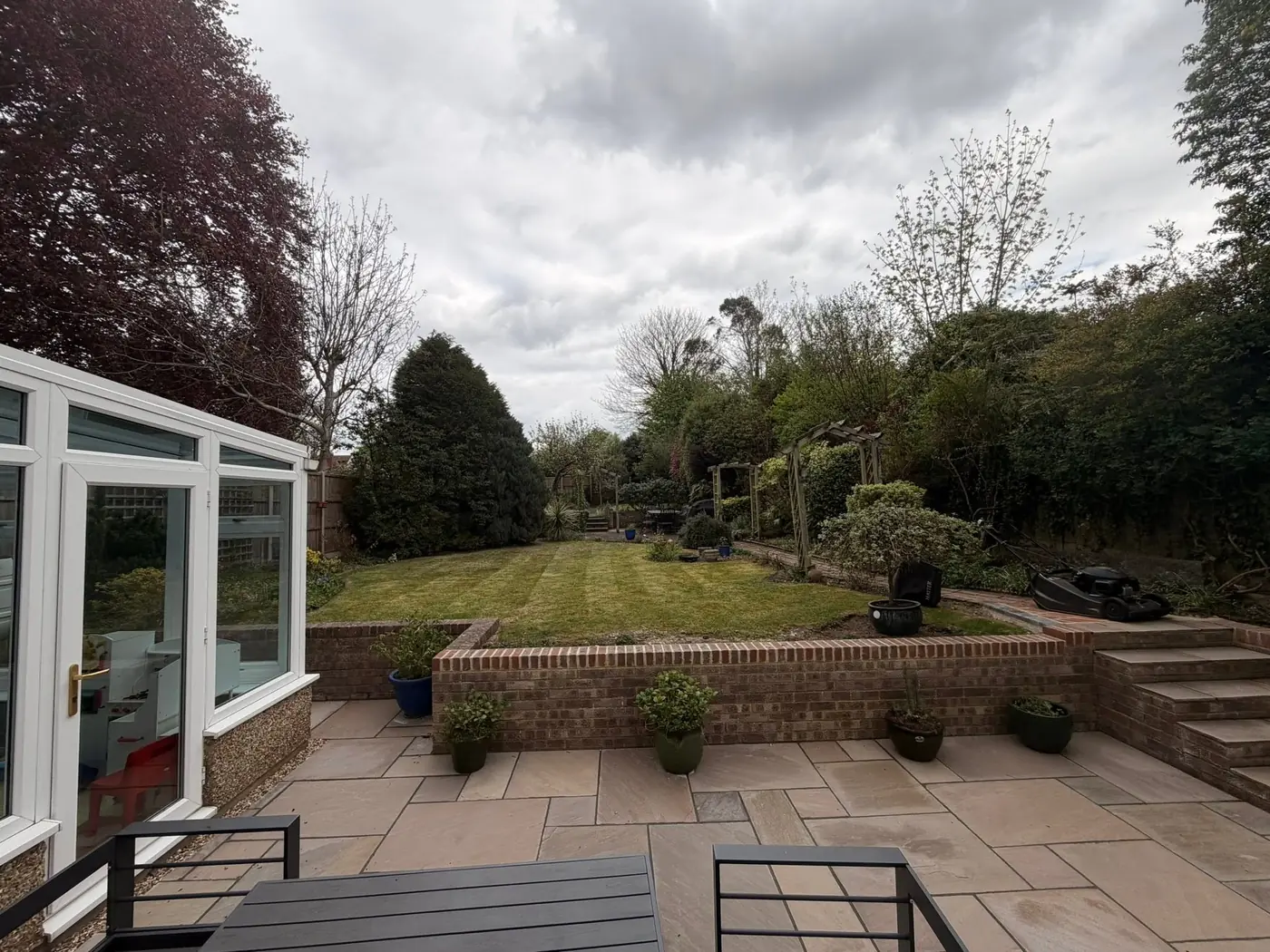
Planning Permission for a Patio at a glance
- Back-garden patio
- Not usually needed for a house, at ground level
- Front garden
- Over 5 square metres of impermeable paving needs permission
- Permeable options
- Gravel, permeable block paving, porous asphalt, or draining to a lawn or border
- Raised decking
- Needs permission if more than 30cm above the ground
- Flats and maisonettes
- Permitted development rights do not apply
Do you need planning permission for a back-garden patio?
For a house, a patio laid at ground level in the back garden is normally permitted development, so no application is needed. Things change if you raise the patio: decking or a raised platform more than 30cm above the ground needs planning permission. Flats, maisonettes and listed buildings do not have the same permitted development rights.
What is the 5 square metre front-garden rule?
Since 1 October 2008, paving more than 5 square metres of a front garden only counts as permitted development if the surface is permeable or rainwater is directed to a lawn or border to drain naturally. Traditional impermeable paving, such as concrete or standard slabs, over that area needs planning permission. The rule exists to reduce surface-water flooding.
Which paving surfaces count as permeable?
| Surface | Permeable? | Planning over 5m² |
|---|---|---|
| Gravel | Yes | Not usually needed |
| Permeable block paving | Yes, designed to drain through joints | Not usually needed |
| Porous asphalt or resin-bound | Yes, if laid as permeable | Not usually needed |
| Standard slabs or concrete draining to a lawn or border | Water drains naturally | Not usually needed |
| Standard slabs or concrete draining to the road | No | Planning permission needed |
Do building regulations apply to patios?
Building regulations do not generally apply to paving a garden. However, a patio or path must not make access to your home any less satisfactory than before, and paving next to the house should finish at least 150mm below the damp-proof course to avoid damp.
Sources and further reading
Related guides and services
- How to Clean a Patio SafelyJet washing stone, porcelain and block paving without damage.
- Planning Permission for a FenceThe 2 metre and 1 metre height limits and when you need to ask the council.
- Patio InstallationsOur patio installation service in Epsom and nearby villages.
- All garden guidesBrowse every guide in one place.
Planning Permission for a Patio FAQs
Do I need planning permission for a patio in my back garden?
Not usually. A ground-level patio in the back garden of a house is normally permitted development. Raised decking or platforms over 30cm high, flats, maisonettes and listed buildings are exceptions.
Can I pave over my front garden?
Yes, but if you pave more than 5 square metres you need a permeable surface or must drain the water to a lawn or border; otherwise you need planning permission.
Is gravel permeable for planning purposes?
Yes. Gravel lets rainwater soak through, so it can be used over a front garden without planning permission under the permeable surfacing rules.
How high can a patio be?
Paving next to the house should finish at least 150mm below the damp-proof course. A raised platform or decking more than 30cm above the ground needs planning permission.
Can you install a patio for me in Epsom?
Yes. Natural Aspect Gardening installs new and replacement patios across Epsom, Ewell and nearby villages. Call 07903085777 for a quotation.
Would you like a hand with this?
Our patio installation service covers Epsom, Ewell and nearby villages. Call 07903085777 for a quotation.